
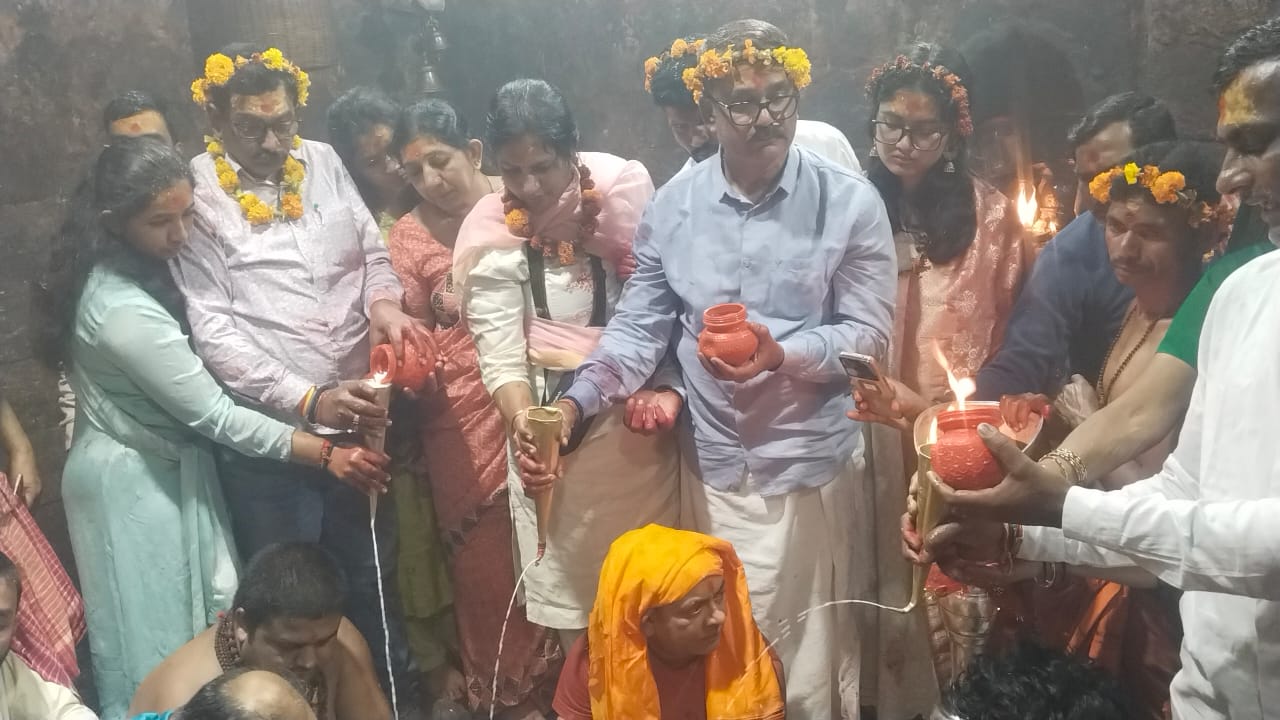
The Shiv Chalisa is a Hindi devotional hymn of about forty verses to Lord Shiva — one of the most recited in North India, especially on Mondays, at Pradosh and through Shravan. The poet names himself in the text as Ayodhyadas. “Chalisa” means “forty”: the hymn is named for its forty-odd verses (counts differ slightly between editions), framed by an opening and a closing doha. The text below is in Hindi (Devanagari); a summary in English follows.
Shiv Chalisa — full text
Doha
जय गणेश गिरिजासुवन मंगल मूल सुजान ।
कहत अयोध्यादास तुम देउ अभय वरदान ॥
Chaupai
जय गिरिजापति दीनदयाला । सदा करत सन्तन प्रतिपाला ॥
भाल चन्द्रमा सोहत नीके । कानन कुण्डल नागफनी के ॥
अंग गौर शिर गंग बहाये । मुण्डमाल तन छार लगाये ॥
वस्त्र खाल बाघम्बर सोहे । छवि को देखि नाग मन मोहे ॥
मैना मातु की हवे दुलारी । बाम अंग सोहत छवि न्यारी ॥
कर त्रिशूल सोहत छवि भारी । करत सदा शत्रुन क्षयकारी ॥
नन्दि गणेश सोहै तहँ कैसे । सागर मध्य कमल हैं जैसे ॥
कार्तिक श्याम और गणराऊ । या छवि को कहि जात न काऊ ॥
देवन जबहीं जाय पुकारा । तब ही दुख प्रभु आप निवारा ॥
किया उपद्रव तारक भारी । देवन सब मिलि तुमहिं जुहारी ॥
तुरत षडानन आप पठायउ । लवनिमेष महँ मारि गिरायउ ॥
आप जलंधर असुर संहारा । सुयश तुम्हार विदित संसारा ॥
त्रिपुरासुर सन लरी लड़ाई । सबहिं कृपा कर लीन बचाई ॥
किया तपहिं भागीरथ भारी । पुरब प्रतिज्ञा तासु पुरारी ॥
दानिन महँ तुम सम कोउ नाहीं । सेवक स्तुति करत सदाहीं ॥
वेद नाम महिमा तव गाई । अकथ अनादि भेद नहिं पाई ॥
प्रकटी उदधि मथन में ज्वाला । जरत सुरासुर भए विहाला ॥
कीन्ही दया तहँ करी सहाई । नीलकण्ठ तब नाम कहाई ॥
पूजन रामचन्द्र जब कीन्हा । जीत के लंक विभीषण दीन्हा ॥
सहस कमल में हो रहे धारी । कीन्ह परीक्षा तबहिं पुरारी ॥
एक कमल प्रभु राखेउ जोई । कमल नयन पूजन चहं सोई ॥
कठिन भक्ति देखी प्रभु शंकर । भए प्रसन्न दिए इच्छित वर ॥
जय जय जय अनन्त अविनाशी । करत कृपा सब के घटवासी ॥
दुष्ट सकल नित मोहि सतावै । भ्रमत रहौं मोहे चैन न आवै ॥
त्राहि त्राहि मैं नाथ पुकारो । यह अवसर मोहि आन उबारो ॥
लै त्रिशूल शत्रुन को मारो । संकट से मोहि आन उबारो ॥
मात-पिता भ्राता सब होई । संकट में पूछत नहिं कोई ॥
स्वामी एक है आस तुम्हारी । आय हरहु अब संकट भारी ॥
धन निर्धन को देत सदा हीं । जो कोई जांचे सो फल पाहीं ॥
अस्तुति केहि विधि करैं तुम्हारी । क्षमहु नाथ अब चूक हमारी ॥
शंकर हो संकट के नाशन । मंगल कारण विघ्न विनाशन ॥
योगी यति ऋषि मुनि सब ध्यावैं । शारद नारद शीश नवावैं ॥
नमो नमो जय नमः शिवाय । सुर ब्रह्मादिक पार न पाय ॥
जो यह पाठ करे मन लाई । ता पर होत है शम्भु सहाई ॥
ऋनियां जो कोई हो अधिकारी । पाठ करे सो पावन हारी ॥
पुत्र होन कर इच्छा जोई । निश्चय शिव प्रसाद तेहि होई ॥
पण्डित त्रयोदशी को लावे । ध्यान पूर्वक होम करावे ॥
त्रयोदशी व्रत करै हमेशा । ताके तन नहीं रहै कलेशा ॥
धूप दीप नैवेद्य चढ़ावे । शंकर सम्मुख पाठ सुनावे ॥
जन्म जन्म के पाप नसावे । अन्तवास शिवपुर में पावे ॥
कहे अयोध्या आस तुम्हारी । जानि सकल दुःख हरहु हमारी ॥
Closing doha
नित्त नेम उठि प्रातः ही पाठ करो चालीस ।
तुम मेरी मनकामना पूर्ण करो जगदीश ॥
मगसिर छठि हेमन्त ऋतु संवत चौसठ जान ।
अस्तुति चालीसा शिवहि पूर्ण कीन कल्याण ॥
A note on the text: printed editions of these hymns differ slightly in spelling and, occasionally, in a line. This page follows the widely used standard version; if your family or temple follows another, keep to that.
What the Chalisa says
- Part 1 — Shiva’s form: the crescent moon on his brow, serpent earrings, the Ganga flowing from his locks, ash on his body, the tiger-skin, the trident, Nandi and the family of Parvati, Ganesha and Kartikeya.
- Part 2 — his deeds: how he answered the gods’ call against the demon Tarakasura, slew Jalandhar, and saved the gods from Tripurasura; and how he fulfilled Bhagirath’s penance by bearing the Ganga.
- Part 3 — the poison and the lotus: the fire that rose from the churning of the ocean, which Shiva drank, earning the name Neelkantha; and the story of Rama worshipping Shiva before the conquest of Lanka.
- Part 4 — the prayer: the devotee cries for refuge — “save me, there is no one else; parents and brothers do not ask after you in trouble” — and asks Shiva to end his difficulties.
- Part 5 — the fruit: the hymn itself says that Shambhu helps whoever recites it with a steady mind, and mentions observing the Trayodashi (Pradosh) vrat; it ends with the poet’s plea.
When and how to recite
- Mondays, Pradosh (Trayodashi) evenings and every day in Shravan; the closing doha suggests reciting it each morning.
- Before a Shivling or Shiva image, after a bath, with a lit diya.
- Many people sing it in a group, followed by the Shiv aarti.
- Read it slowly; there is no required count.
For observances see Somvar vrat vidhi and Pradosh vrat puja vidhi.
The Chalisa names certain fruits for reciting it. Treat these as the tradition’s expression of faith — a hymn is a prayer, not a guarantee, and it is never a substitute for medical or practical help.
Frequently asked questions
Who wrote the Shiv Chalisa?
The text names the poet as Ayodhyadas.
How many times should the Shiv Chalisa be recited?
There is no fixed count. Many devotees recite it once daily or on Mondays and Pradosh; the closing doha mentions reciting it every morning.
Why does the Chalisa mention Trayodashi?
The Chalisa itself refers to observing the Trayodashi vrat (Pradosh), which is dedicated to Shiva — see our Pradosh vrat guide.
Share your name and gotra on WhatsApp — our pujari takes your sankalp and performs the puja at the Jyotirlinga. Video and prasad included.