

The Bilvashtakam is an eight-verse hymn on the bilva (bel) leaf — the offering most dear to Shiva. Every verse ends with the same line, “ekabilvam shivarpanam” — “one bilva leaf offered to Shiva.” Its first verse, on the three-leaved bilva and the three eyes of Shiva, is chanted on its own in many homes while offering a leaf. Read the significance and the traditional rules in our guide to offering bilva patra.
Bilvashtakam text with meaning
त्रिदलं त्रिगुणाकारं त्रिनेत्रं च त्रियायुधम् ।
त्रिजन्मपापसंहारं एकबिल्वं शिवार्पणम् ॥१॥
A three-leaved leaf, of three-fold nature, like the three eyes and the three-pronged weapon; it destroys the sins of three births — one bilva leaf offered to Shiva.
त्रिशाखैर्बिल्वपत्रैश्च ह्यच्छिद्रैः कोमलैः शुभैः ।
शिवपूजां करिष्यामि एकबिल्वं शिवार्पणम् ॥२॥
With three-branched, unbroken, tender and auspicious bilva leaves I shall worship Shiva — one bilva leaf offered to Shiva.
अखण्डबिल्वपत्रेण पूजिते नन्दिकेश्वरे ।
शुद्ध्यन्ति सर्वपापेभ्यो ह्येकबिल्वं शिवार्पणम् ॥३॥
When Nandikeshwara (Shiva) is worshipped with an unbroken bilva leaf, people are cleansed of all sins — one bilva leaf offered to Shiva.
शालग्रामशिलामेकां विप्राणां जातु चार्पयेत् ।
सोमयज्ञमहापुण्यं एकबिल्वं शिवार्पणम् ॥४॥
The great merit of giving a single shaligrama stone to Brahmins, or of a Soma sacrifice, equals that of one bilva leaf offered to Shiva.
दन्तिकोटिसहस्राणि अश्वमेधशतानि च ।
कोटिकन्यामहादानं एकबिल्वं शिवार्पणम् ॥५॥
Gifts of thousands of crores of elephants, hundreds of Ashvamedha sacrifices and the great charity of a crore of kanyadan — the merit of one bilva leaf offered to Shiva is said to equal them.
लक्ष्म्याः स्तनत उत्पन्नं महादेवस्य च प्रियम् ।
बिल्ववृक्षं प्रयच्छामि एकबिल्वं शिवार्पणम् ॥६॥
The bilva tree, said in legend to be born from Lakshmi, is dear to Mahadeva; I offer the bilva — one bilva leaf offered to Shiva.
दर्शनं बिल्ववृक्षस्य स्पर्शनं पापनाशनम् ।
अघोरपापसंहारं एकबिल्वं शिवार्पणम् ॥७॥
The sight of a bilva tree and its touch destroy sin; it removes even terrible sins — one bilva leaf offered to Shiva.
मूलतो ब्रह्मरूपाय मध्यतो विष्णुरूपिणे ।
अग्रतः शिवरूपाय एकबिल्वं शिवार्पणम् ॥८॥
At its root the form of Brahma, in the middle Vishnu, at the tip Shiva — one bilva leaf offered to Shiva.
बिल्वाष्टकमिदं पुण्यं यः पठेच्छिवसन्निधौ ।
सर्वपापविनिर्मुक्तः शिवलोकमवाप्नुयात् ॥९॥
“Whoever reads this holy Bilvashtakam in Shiva’s presence is freed from all sins and attains Shivaloka.”
A note on the text: printed editions of these hymns differ slightly in spelling and, occasionally, in a line. This page follows the widely used standard version; if your family or temple follows another, keep to that.
How it is used
- Chant the first verse (or the whole hymn) while offering each bel leaf in an abhishek.
- Recite it in the month of Shravan and on Mondays while worshipping at home.
- Read the verses with the Rudrabhishek vidhi for a fuller puja.
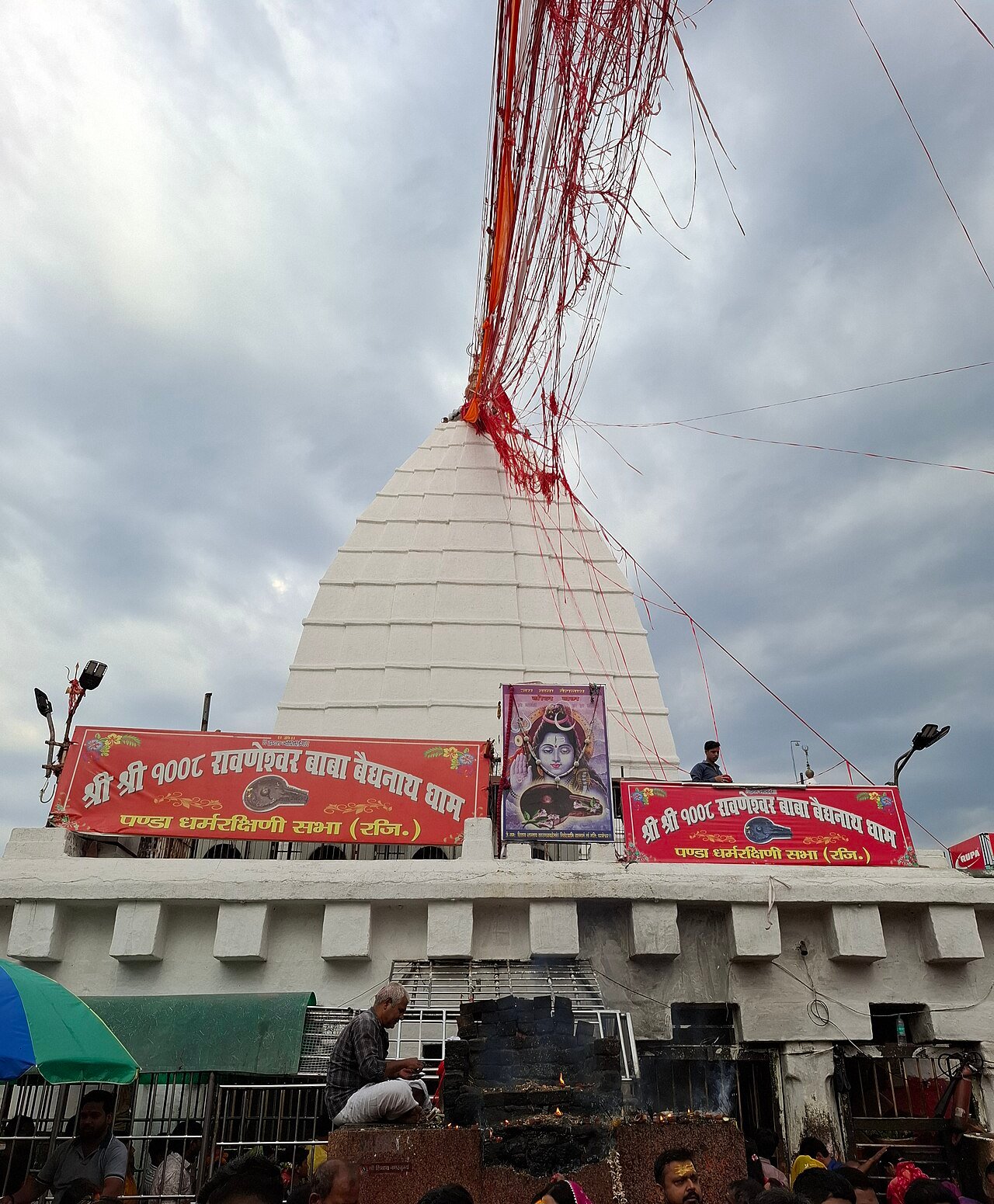
Some verses speak of the merit of the offering in comparison with great gifts and sacrifices. These are the traditional way of saying the offering is precious; the real fruit, as always, is devotion. At Baidyanath Dham bel patra is offered during every abhishek — our pujaris offer it on your behalf in Dugdh Abhishekam and Rudrabhishek.
Frequently asked questions
What does ekabilvam shivarpanam mean?
“One bilva leaf offered to Shiva” — the refrain that ends every verse of the Bilvashtakam.
Can I recite the Bilvashtakam without offering bel leaves?
Yes. You can recite it before a Shiva image at any time; the hymn is itself an offering of devotion.
Share your name and gotra on WhatsApp — our pujari takes your sankalp and performs the puja at the Jyotirlinga. Video and prasad included.